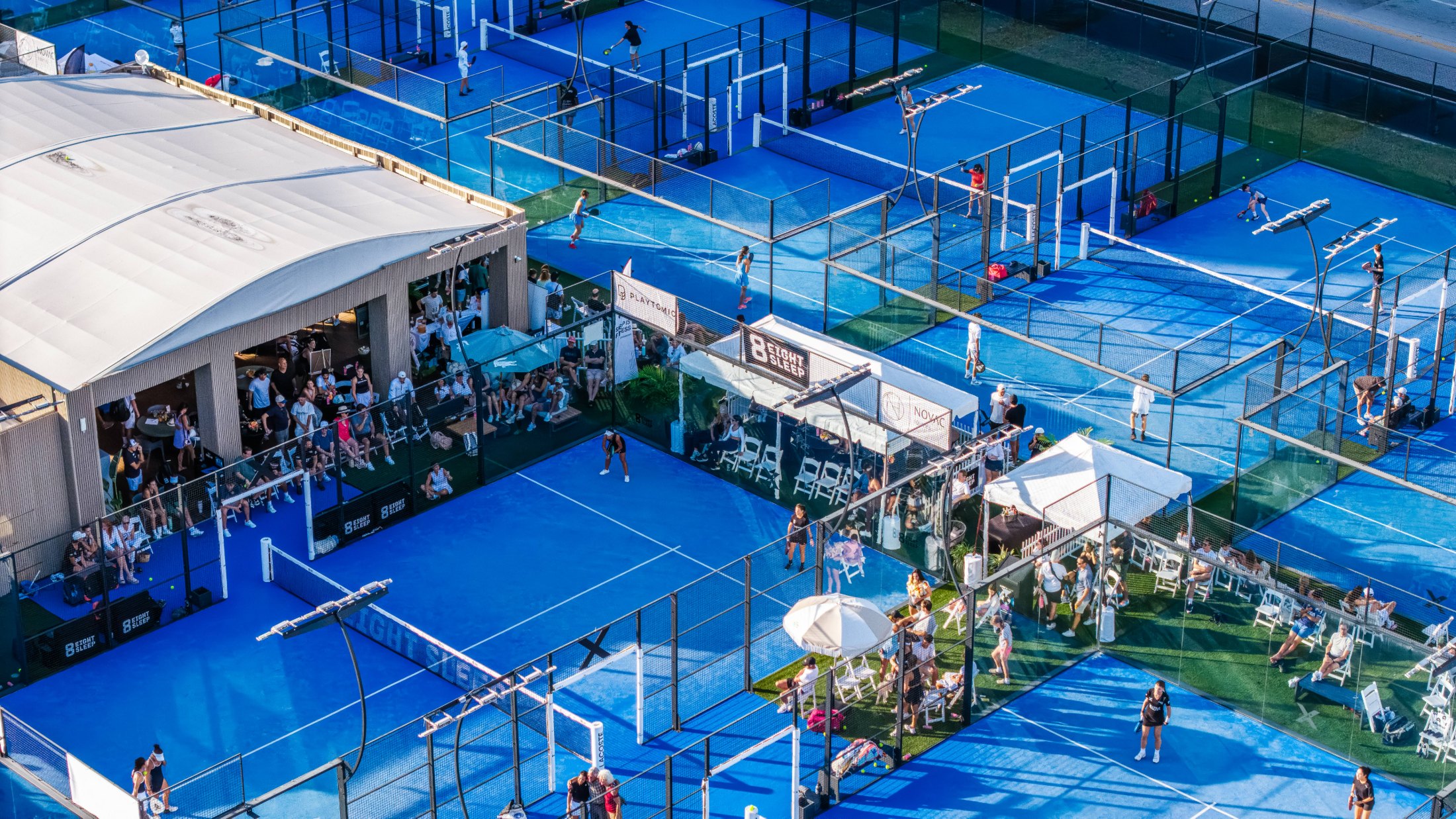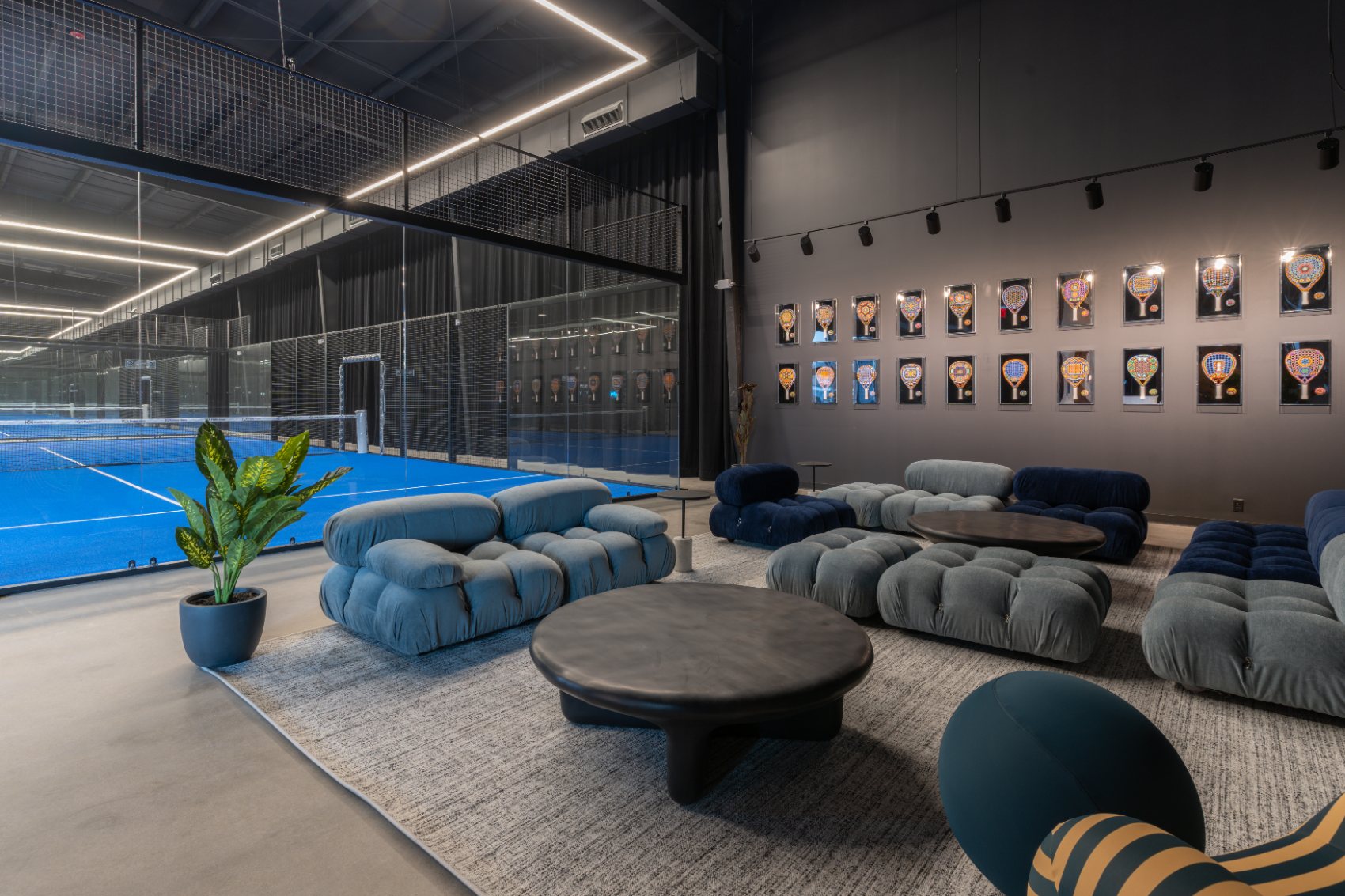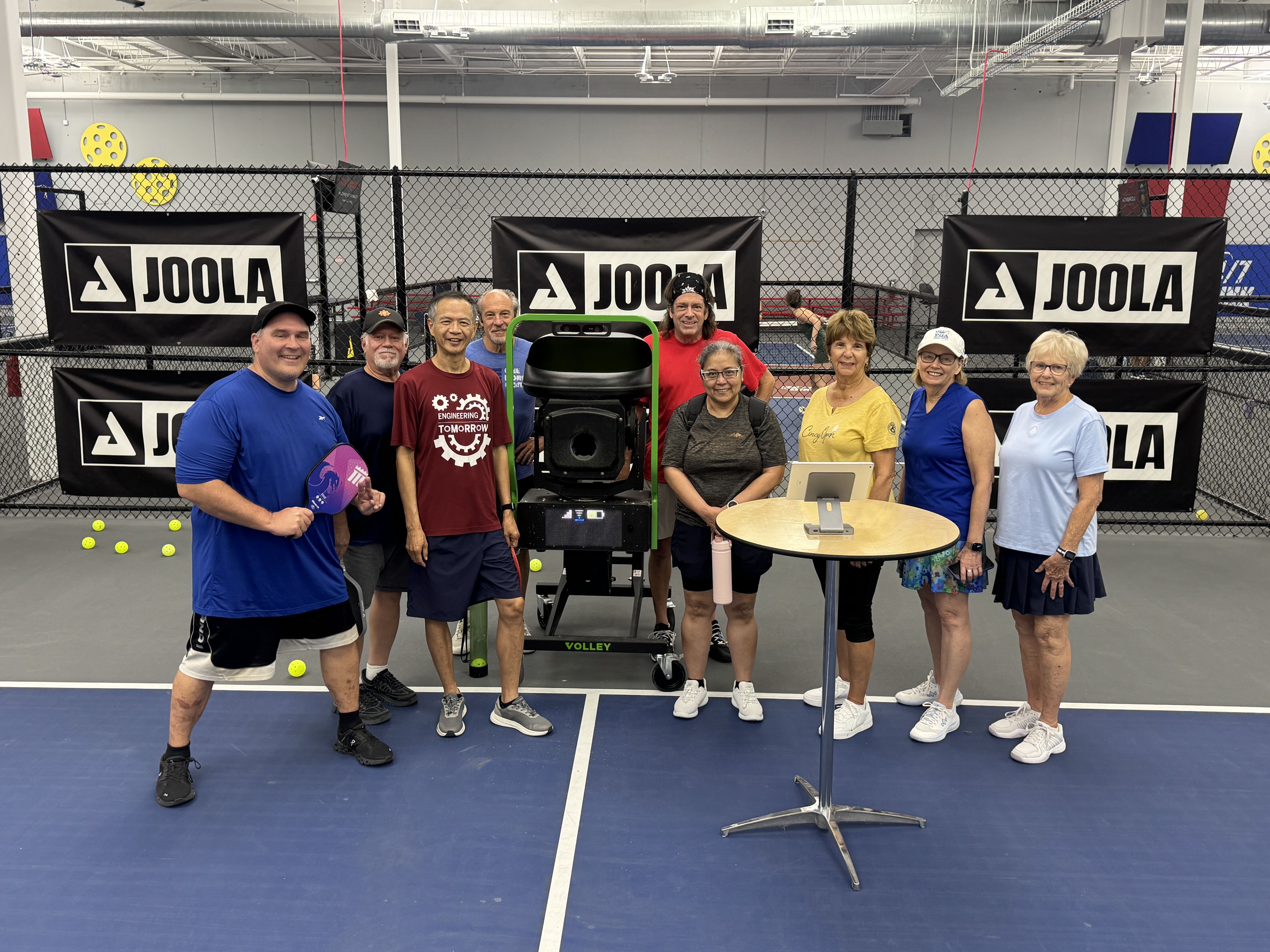

Padel + Pickle Club is a private member-based club in St. Louis and the only place to play padel within a 300-mile radius. General manager Ryan Leslie runs it with a simple rule: prioritize member experience first, trust the business results to follow.
That mindset shaped his decision to bring in the Volley trainer on the padel courts. Ryan added it because he believed members would value an always-available way to practice, not because he expected it to become a profit center. But the revenue followed anyway. Padel + Pickle Club is consistently bringing in about $200 a month over the trainer's lease cost.
How the trainer landed.
Ryan first came across Volley in October 2025 at a padel tournament in Atlanta. He talked to the Volley team, signed up for the one-month trial, and timed the delivery to a tournament his own club was hosting a few weeks later. The trainer stayed on court throughout the tournament weekend, open for any member who wanted to try.
Keeping the trainer was a member decision as much as Ryan's.
Ryan's playbook for driving trainer adoption.
Behind that steady revenue is a simple rollout playbook any club can copy. It comes down to a few small habits Ryan built into how the trainer shows up at the club.
The Playbook
How Padel + Pickle Club drives trainer adoption
- 1Put a champion behind it.Ryan recruited Padel + Pickle's club champion, a former college tennis player and the strongest member at the club, and offered him free trainer time in exchange for helping drive Volley adoption.
- 2Build workouts members can immediately use.The champion builds custom workouts in Volley, tagged to the Padel + Pickle Club, so members have a library of drills designed for the club.
- 3Demo it during peak hours.When the club is at its busiest and the courts around him are full, the champion is encouraged to take the trainer onto an open court in front of the lounge and the bar.
When a curious member walks over, the champion shows them the app, runs them through a session, and points them at the workout library he's been building.
Ryan also found another unexpected adoption driver: the club's head pro.
The head pro uses the trainer during lessons so he can stand on the same side of the court as his student to correct form, instead of feeding balls from across the net. When the lesson ends, he sends the student back to the Volley trainer to keep practicing the same shots on their own.
The student leaves with a structured way to keep practicing between lessons, without replacing the lesson itself.
That's why Ryan's revenue from the trainer is steady. His members know about it, they're excited about it, and have already been wowed by it before they ever book a session of their own.
An extra $2,400 a year, with room to grow.
Members pay $25 an hour per person to use the trainer and the court. Between walk-in usage and members who book regularly, the trainer brings in roughly $200 over the lease every month. Ryan's best months hit close to double that.
He also introduced a small subscription for his all-inclusive members: $60 a month for six sessions on the trainer. It creates predictable recurring revenue and gives frequent users a discount over paying hourly. Only a handful of members are on it today, but Ryan sees it as a hedge if hourly bookings ever slow.
The takeaway.
At Padel + Pickle Club, Volley works because Ryan treated adoption as intentionally as the purchase itself. Members are repeatedly exposed to the trainer during the club's busiest hours, guided into their first sessions, and given a library of workouts designed for their club. The result is a premium amenity members actually use, one that's already paying for itself while strengthening the member experience Ryan set out to build in the first place.