
Zero Zero Two doesn't think of itself as a pickleball facility. Its co-founders, both serial entrepreneurs with marketing, advertising, and sales backgrounds, built the Fort Collins club as an experience company, with every part of the facility reverse-engineered from how a member should feel walking in, while they're there, and when they walk out. The cafe, the lounge, the courts, and the Volley trainer were all designed as touch points in that journey.
That frame is why Zero Zero Two's Volley rollout is what every club's should look like. When the founders introduced Volley to the club, they treated it as another touch point in what they were already curating: “Volley is one of the tactical touch points in the organization, a tool to have an experience.” But none of that matters if members don't actually use the trainer, and that's where Zero Zero Two's instincts went to work.

The challenge underneath an experience-led rollout.
Volley is the most premium training machine most members have ever seen on a club floor, and that novelty cuts both ways. It's part of what makes the trainer powerful as an experience, and part of what can keep a hesitant member from trying it the first time.
For Zero Zero Two, that meant designing the introduction to Volley with the same care they put into every other touch point in the facility. The goal, in Zervas's words: demystification, introduction, connection.
The rollout.
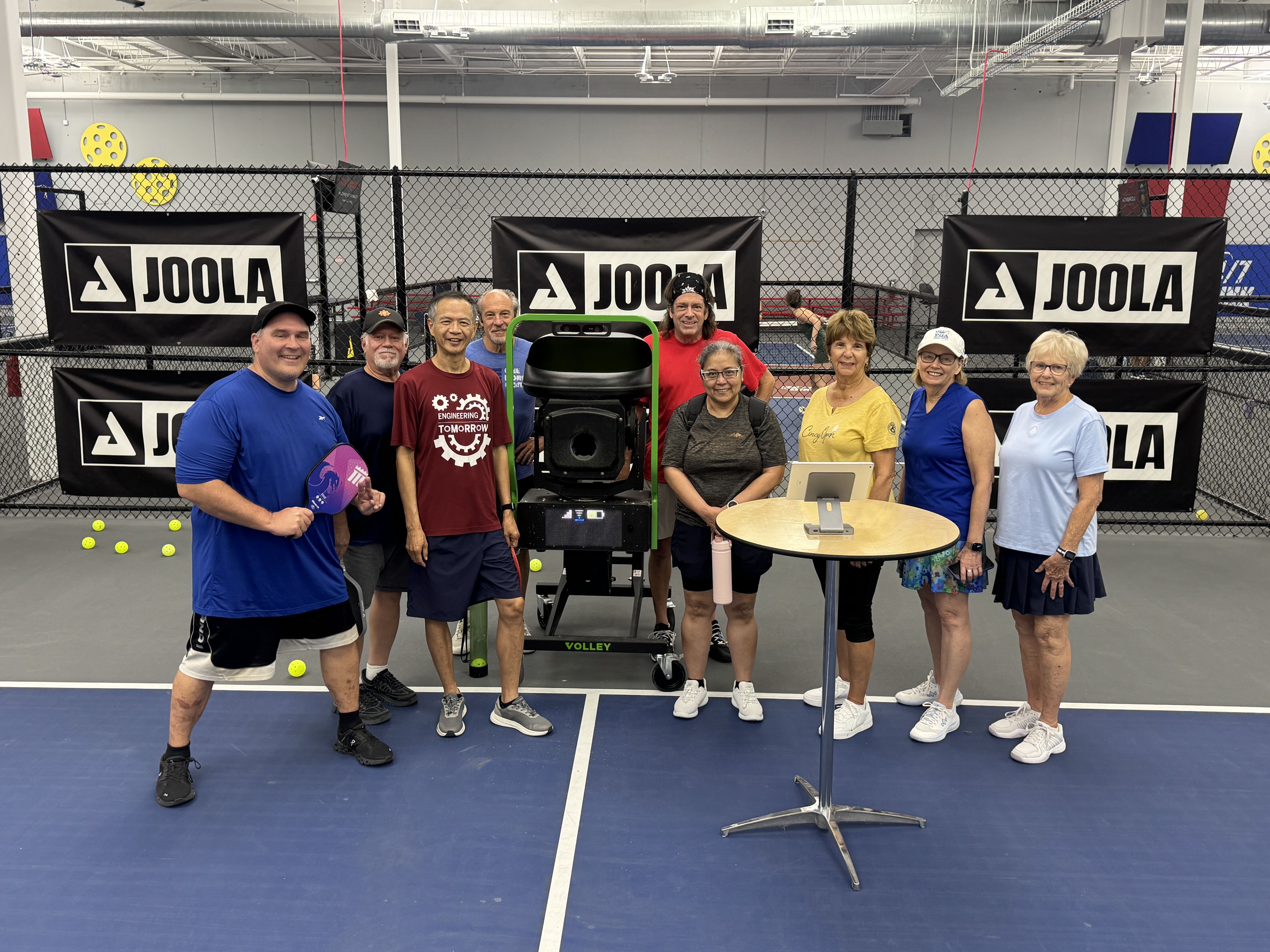
Zero Zero Two ran free open Volley clinics. Sessions ran 15 to 20 minutes, four members each, led by a coach who knew how to work the Volley trainer. Over the course of a month and a half, they ran roughly 20 to 25 of those sessions, staggered across the day so they could reach the after-work crowd and the retiree crowd alike. The club paid the coach's time, and members paid nothing.
The strategy was simple: make the first introduction to Volley free, hands-on, and social, so a member walks out having actually felt how it works.
But the participants weren't the only audience. The founders designed the clinics for the people watching, too.
Zervas calls this “astroturfing”: staging the social proof so it spreads on its own. The loudest channel was the lounge itself, where the people who'd just used Volley would walk straight back to their friends and tell them they had to try it. Eighty members went through the free program.
Wiring Volley into the rest of the experience.
While a rollout creates curiosity, integration creates stickiness. Zero Zero Two is now weaving Volley into the two other improvement channels at the facility: coach-led clinics and a Pod Play replay-and-stats system, so they feed each other rather than competing.
In practice, that looks like coaches assigning Volley “homework” after a clinic. The longer-term vision has Pod Play surfacing that a member only gets to the net 30% of the time and recommending a specific Volley drill to fix it. The move Michael is most excited about uses Volley inside the lesson, not just after it. Instead of the coach feeding balls from the other side of the net, Volley does the feeding, which frees the coach to stand on the same side as their student, mirror the motion, and give feedback in real time.
He's also threading a careful needle with the pro on staff.
This model gives coaches a reason to lean into Volley rather than push it away, and it gives members a reason to build both into their regular cadence to improve their game.
The numbers.
Six months in, the model is working. Zero Zero Two charges members per use of the Volley trainer, and per Volley's own usage data, a core of about 15 regulars is now using the machine 20 to 25 times a week, roughly one to two sessions per person. That puts the club ROI-positive on the trainer and validates the rollout approach.
But this is just the beginning. Zervas sees a bigger opportunity in turning Volley into a monthly subscription, with unlimited access during off-peak hours when the rest of the club isn't competing for the same inventory. The model would give the club predictable recurring revenue, give members a clear upgrade path from pay-per-use, and turn underused court time into a revenue stream.
The takeaway every existing customer should steal.
Zervas's biggest piece of advice for other operators looking to incorporate Volley into their club is the lesson at the heart of Zero Zero Two's approach: the launch matters, but what happens after that matters just as much. The trainer shouldn't sit off to the side. It should be showcased and woven into the experience of the club.
The Playbook
How to roll out Volley like Zero Zero Two
- 1Frame Volley as an experience, not a piece of equipment.Volley is part of the member experience, not a machine off to the side.
- 2Run free open clinics to demystify it.Run 15–20 minute short sessions, of four members each, led by a coach who knows the Volley trainer. Stagger them across the day to catch every crowd.
- 3Stage Volley clinics where everyone can see.Hold clinics in the most visible part of the club. The people watching matter as much as the people playing.
- 4Weave Volley into your coaching program.In lessons, let Volley feed balls so the coach can stand beside the student and mirror the motion. Let pros build custom drills in Volley for members to practice between sessions.
- 5Connect it to the rest of your improvement stack.The Volley trainer, private sessions, clinics, and other court technology should feed each other. Then layer in a subscription for unlimited off-peak access to turn idle court time into recurring revenue.
Volley keeps building features to support the same loop. Zervas is especially excited about the Volley Skill Rating assessment, which gives every player an objective score on their game and a breakdown by shot type, so members know exactly where they stand and have a clear reason to keep coming back to raise it.
That's what makes a trainer like Volley different from a piece of equipment. The more a club weaves it in, the more it gives back.