
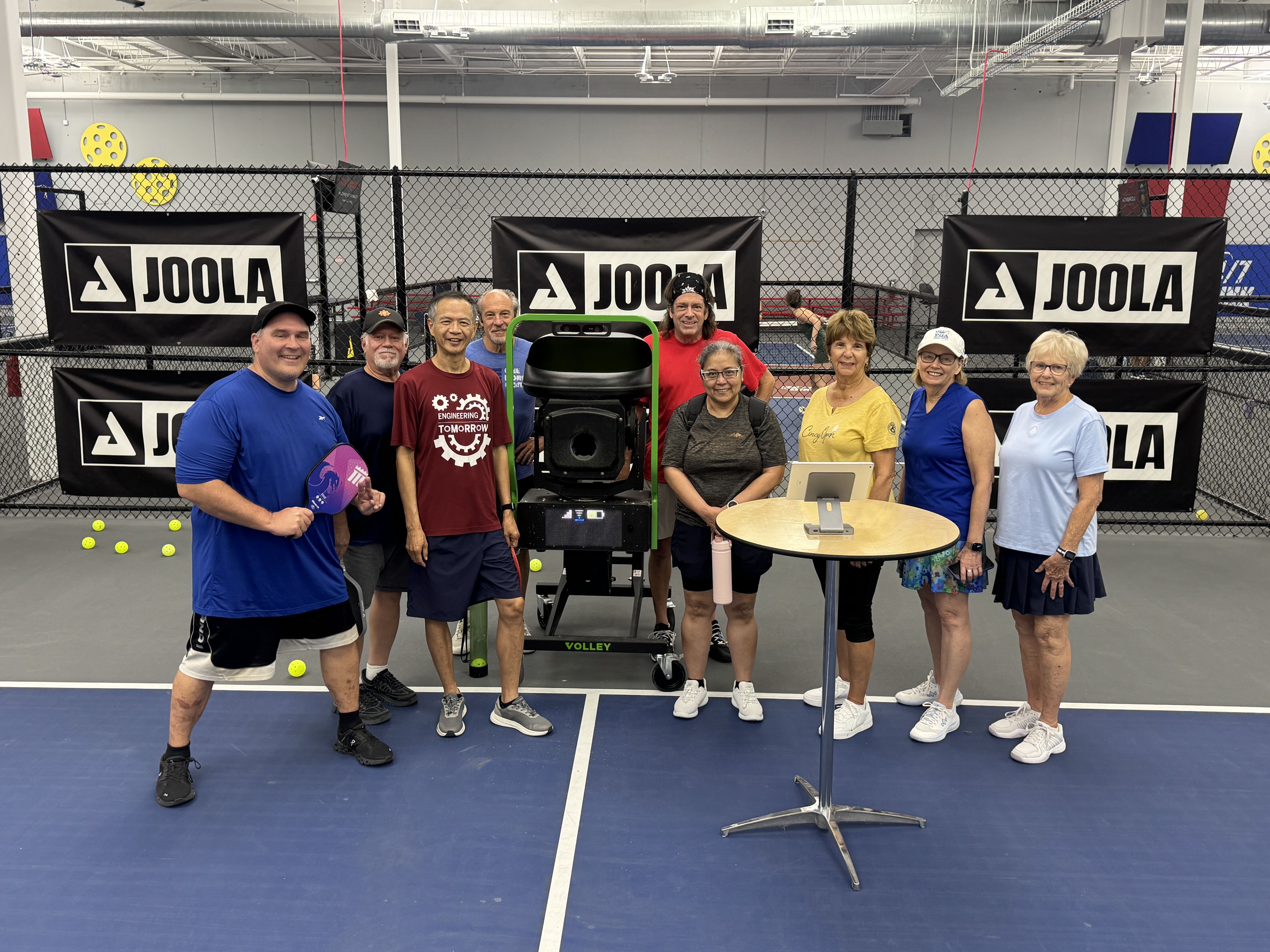
The thing that makes pickleball so easy to pick up is also what makes open play hard to run. A brand new player can walk onto a court and play a real game on day one, so open play fills up with every level at once, and sorting that into good matchups can turn into a major job.
Chris Sears built Indianapolis Pickleball Club (IPC) around open play, and IPC now runs three locations in the metro area. The club prides itself on having the best open play in the city, and accurate ratings are what make that possible.
The challenge: getting every player rated
IPC's original process for getting members rated and into open play relied on instructor-led assessments.
Chris was paying instructors $50 an hour to assess four players during a one-hour session, then complete the write-up and assign a rating for each player afterward. Results were supposed to be delivered within three days, but often took a week. And if fewer than four players signed up, the session couldn't run at all.
When IPC opened a third location in early 2026, the club spent $3,000 to $5,000 in instructor pay just to run a mass rating event and establish a baseline for its incoming membership.
Consistency broke the moment IPC opened that third location. A single director had kept ratings standardized across the first two locations, but the third opened without her day-to-day involvement, and the ratings drifted.
Because of the challenges with instructor-led ratings, IPC tested a second way to get its members rated: recording open play sessions and having a virtual assistant review the footage. They still use this approach today, but every session requires a staff member to start the recording and log the players on court, and a virtual assistant afterward to score the footage and send each player their results.
So when Chris heard there was a way for members to get rated on their own, without a coach or a staff member running the session, he was interested.
An assessment members can run themselves
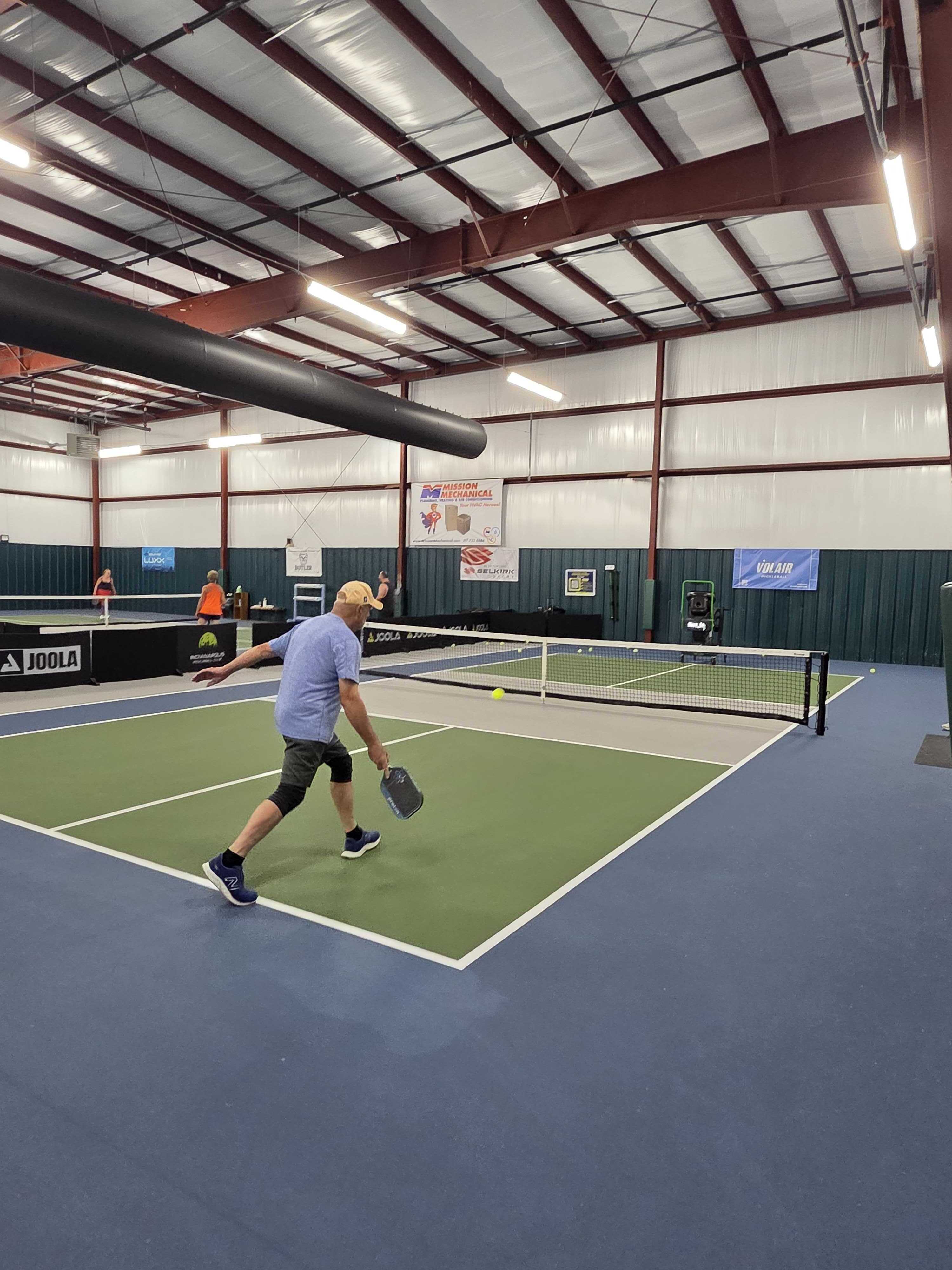
With Volley, getting rated is as simple as showing up and starting the assessment in the Volley app. The trainer rolls onto any court, feeds a standardized sequence of shots and simulated point play, and captures the entire session on video. Every player gets the same ball feeds and the same assessment, creating a consistent experience from player to player.
Behind the scenes, Volley analyzes the performance and assigns a rating, which can then be sent to DUPR. The whole assessment takes less than ten minutes, with no coach, opponent, or camera operator needed.
In August, IPC put one Volley trainer on a court at each of its three locations for one week. The club emailed members a few days ahead and turned the rollout into a friendly competition: which location could rate the most members?
The results
Seven days later, 250 members across IPC's three facilities had been rated.
Under IPC's instructor-led model, rating 250 players would have required roughly 63 hours of court time, more than $3,000 in instructor pay, and hours of additional write-up. With Volley, the team's main job was getting the word out to members.
Members rated themselves in the Volley trainer, so IPC did not need to pay instructors to run in-person rating sessions for all 250 members.
Members liked it too. After the first weekend, Chris wrote: “People have really enjoyed the experience overall. They've all commented on how much more challenging it was than they expected, which is good.”
In one week, IPC saw what Volley makes possible. More members get rated with less staff work, and the open play Chris built the club around stays the best in the city.